The conversations the launch surfaced
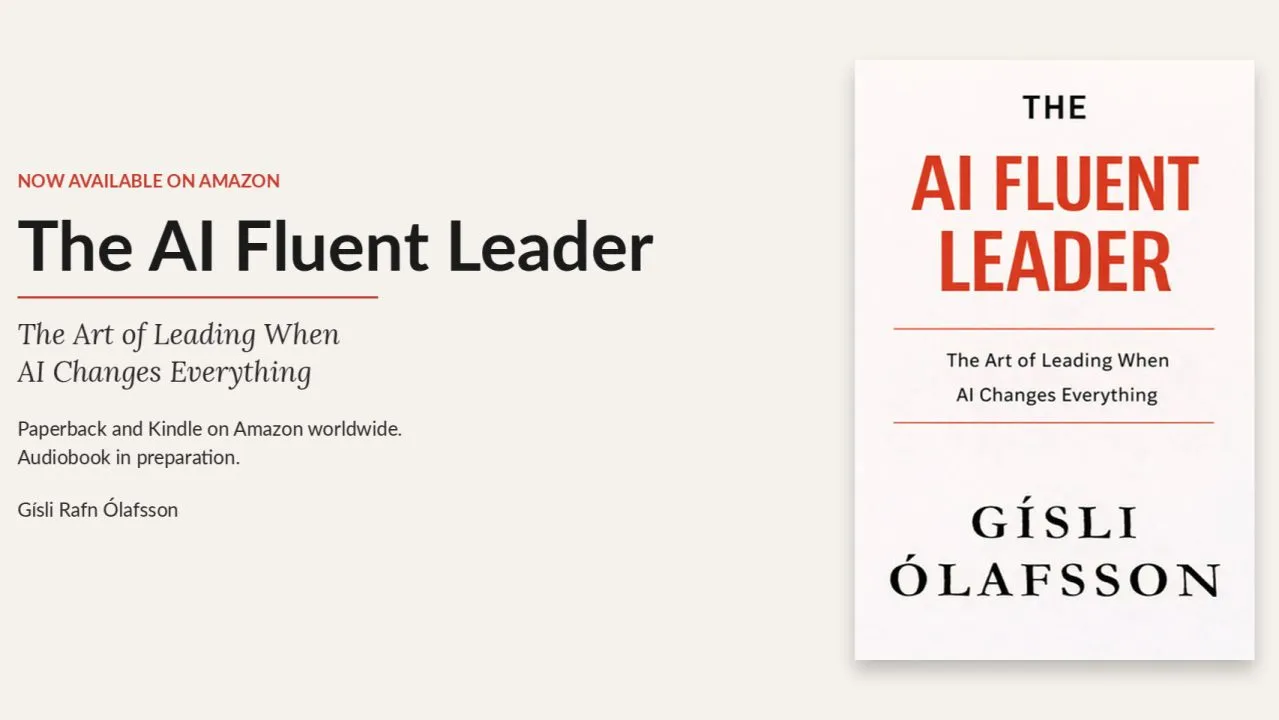
My newest book, The AI Fluent Leader, was published on Thursday. Four days in, the most useful thing I can do this morning is not promote it. The most useful thing I can do is read what the senior leaders who picked it up have written back to me, and tell you what I am noticing.
The first thing I am noticing is which of the four ideas in the book is doing the most work. The thesis that AI does not replace leaders, it exposes them, has been the one most often quoted back to me. The thesis that resilience is a strategic advantage rather than a back-office discipline has been the one most often answered with “yes, but we have not built the institution around that yet.” The line that leadership is responsibility, not authority, has produced the most personal replies, the kind that come from a chief executive late on a Sunday evening with a single sentence and no signature. The line on composed courage as the leadership capability of this decade is the one readers seem to want most and feel least confident about in their own practice.
The second thing I am noticing is what the book did not address well enough. Three questions have come up repeatedly in reader replies and in the first conversations with senior leaders since Thursday. The first concerns the geopolitical dimension of AI procurement, which the book addresses only briefly, and has become even more urgent since I finished writing. The second is about how a leader who is not technically fluent should hold their own posture in a room of advisors who are. The third is about pace: how fast is fast enough, and how fast is reckless, when the institution itself is not ready to absorb the speed the technology permits. I do not have full answers to any of these yet. I have working answers, and I will write them out over the next several weeks.
The third thing I am noticing is who is writing back. The replies that have meant the most have come from leaders who are running the kind of institutions the book was written for: a chief executive of a publicly listed company that has crossed three industry cycles, a board chair of a national infrastructure body, a secretary general of a multilateral organization. These are not the readers who write quickly. When they write, they write briefly and with a specific question. I want to take those questions seriously over the next several weeks. They are better questions than the ones I asked myself while drafting the book.
I want to say one thing that may sound strange in the first week of a launch. I do not think the most useful book I will ever write on this subject has been written yet. The book published on Thursday is the best book I knew how to write up to the point of publication. The conversations of the next two months are going to teach me things I did not know I did not know, and the better book is going to be the one I am able to write with that learning. The launch is not the moment the work concluded. The launch is the moment the work changed shape.
That is what I am taking from the first four days. Across the next eight weeks, I will write here on each of the seven AUGMENT imperatives in turn, with the framework taking the foreground that the four ideas held during the launch. The job of those eight weeks is not to keep the launch alive. The job is to take the second conversation, the one the book is built around, into the actual working life of the readers it was written for.
Thank you to the leaders who have written to me since Thursday. I am reading your feedback carefully and will write over the next eight weeks largely in response to what you have sent.
The AI Fluent Leader is available on Amazon worldwide.
First published in the The AI Fluent Leader newsletter on LinkedIn.