Announcing The AI Fluent Nation
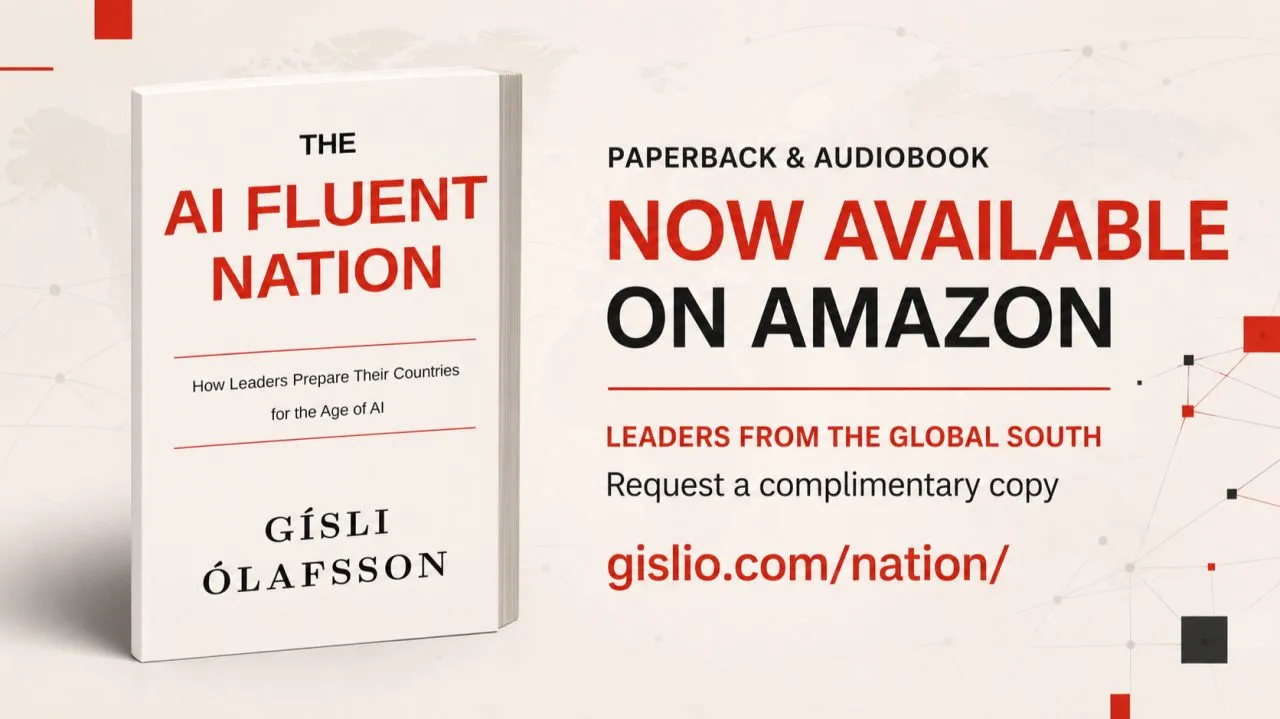
After hearing numerous national leaders talk about the challenges of preparing their countries for the age of AI, I decided to leverage key insights from The AI Fluent Leader and provide guidance at the national level. Thus, The AI Fluent Nation was born.
On July 6, 2026, governments convened in Geneva for the first time to discuss how artificial intelligence should be governed. Five days earlier, the Independent International Scientific Panel on AI, forty scientists from every region, published the first global independent scientific assessment of the technology. Its preliminary report is careful, sober, and quietly alarming.
Three findings from that report define the moment. Adoption has moved faster than any general-purpose technology in history: more than a billion people now use conversational AI every week. Capability is improving faster than institutions can measure it, with task complexity driving systems to double every few months, which means the technology will transform itself several times within a single electoral term. And capacity is concentrated: two countries hold roughly ninety percent of the specialized computing power behind the world’s leading AI supercomputers. For nearly every other nation, including wealthy ones, this technology arrives as an import.
There is a comfortable assumption buried in most national conversations about AI, and the evidence dismantles it. The assumption is that access is the problem, and that once a country’s people can reach the technology, benefits follow. They do not. Young American workers in the most exposed occupations have seen measurable relative employment declines. Danish workers, by the best registry evidence, have seen almost no effect on employment, hours, or wages. Same technology, same timing, same access, opposite outcomes. In India, AI screening for diabetic retinopathy has helped screen hundreds of thousands of people and saved the sight of thousands, not because the algorithm was singular but because it was embedded in clinics, referral pathways, and follow-up care.
The technology is portable. The benefit is not.
What separates the two cases is the enabling environment, which is built by decisions about education, data, institutions, procurement, regulation, and trust. It is built, in other words, by leadership. The UN’s trade and development body counts 118 countries absent from the major AI governance discussions, and fewer than a third of developing countries with a national AI strategy of any kind. The gap that matters is not a compute gap. It is a fluency gap, and fluency is learnable.
What the book gives a leadership team
National fluency is the deliberate, learnable capability of a country’s leadership and institutions to adopt, adapt, govern, and shape artificial intelligence on the country’s own terms. It does not require building frontier models, which is out of reach for almost everyone and unnecessary for almost everyone. It requires institutions and people who understand the technology well enough to use it, question it, contract for it, regulate it, and negotiate over it without flinching.
Who this book is written for
Ministers of ICT, finance, education, health, and planning. Permanent secretaries and senior civil servants. National AI strategy teams and the offices of presidents and prime ministers. Central bank governors and heads of regulatory agencies. And the institutions that work alongside them: development bank knowledge teams, UN agencies, bilateral donors, and the diplomats carrying their countries’ positions into the Global Dialogue. The book assumes no technical background.
You can request an executive summary and/or your complimentary electronic copy of the book at https://gislio.com/nation/
First published in the The AI Fluent Leader newsletter on LinkedIn.