Access to AI is not the same as benefiting from it.
More than a billion people now use AI every week, yet the same technology that disrupted young workers in one country left another almost untouched. The variable is not the technology. It is national fluency: the deliberate, learnable capability of a country to adopt, adapt, govern, and shape AI on its own terms.
Written for the more than 190 countries that will never build a frontier model
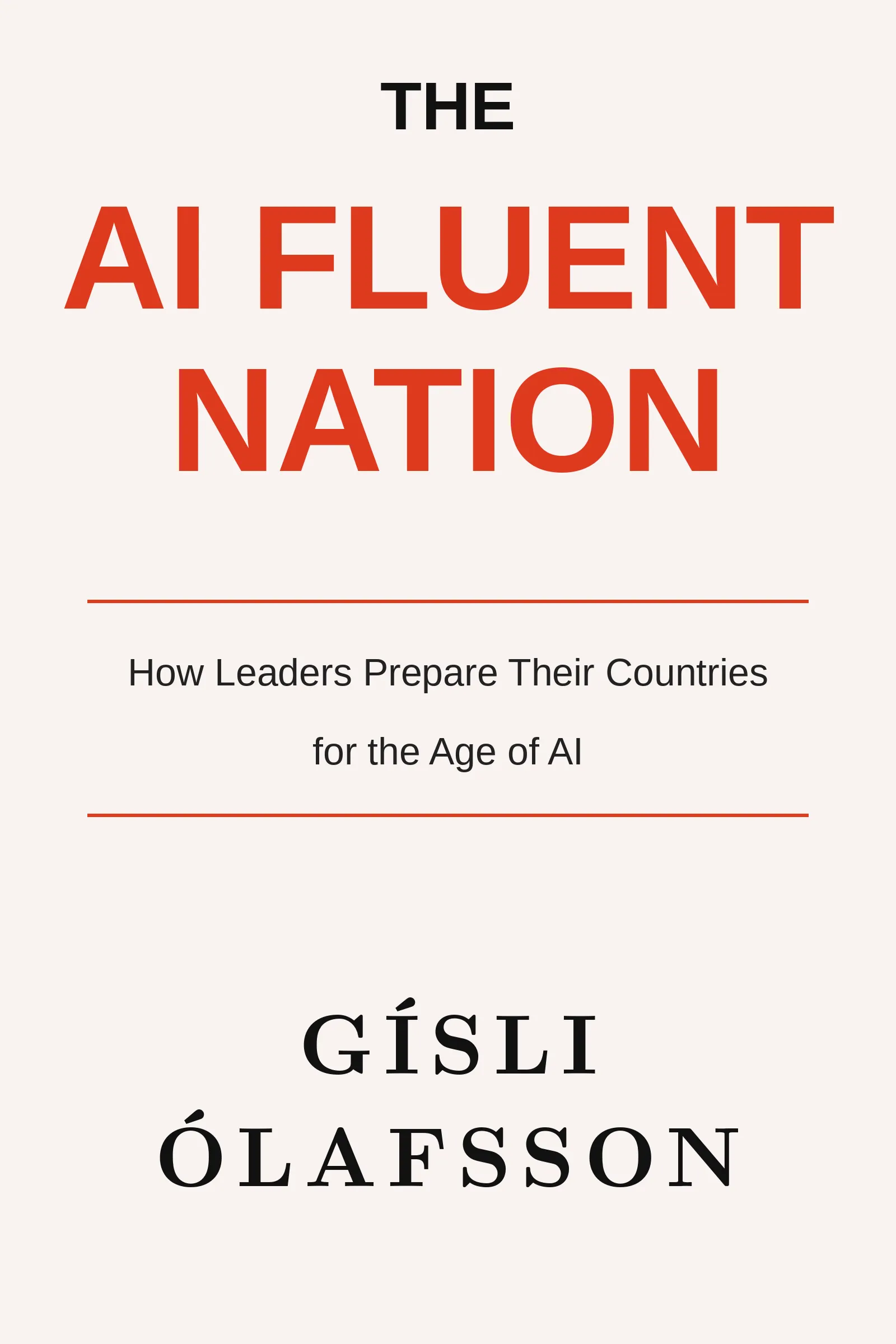
When people imagine the future of artificial intelligence, they picture the two capitals where it is being built. They are looking in the wrong place. The countries that will decide whether AI narrows the world’s divides or widens them are the many that must decide how to live with it: what to teach their children, what to demand in their contracts, what to protect in their laws, and what to say in the rooms where the rules are written.
This book turns the best available evidence into national action. It gives a leadership team a ladder to locate where the country stands, seven pillars to build on, and working instruments to take the first step. It assumes no technical background, and it is written from a small nation, where the illusion of control is simply unavailable and the real questions come into focus.
The technology is portable. The benefit is not.
The National AI Fluency Ladder
Five levels that measure the capability of the state, not the usage of its citizens. Most countries sit at Level 1 or 2. The distance to where they want to be is not a verdict. It is a work plan.
- Level 1AI AbsentNo strategy, no owner, no assessment. Adoption happens anyway, unguided.
- Level 2AI AwareA strategy document, pilots, and a task force. The gap between paper and diffusion.
- Level 3AI AdoptingAI deliberately at work on national problems, at a scale citizens encounter.
- Level 4AI AdaptingModels localized and evaluated against national benchmarks, on terms the country understands.
- Level 5AI ShapingInfluencing the terms on which AI develops. It does not require building frontier models.
Working instruments a government can use
- The seven pillars of national fluency, each moving from evidence to a practical playbook
- A national fluency diagnostic a cabinet or strategy team can run in a single working session
- A 100-day national AI strategy sprint, with the meetings named and the templates ready
- A first 100 days guide for a newly appointed minister
- A map of the global governance rooms, and how a small nation chooses which ones to work
- Ministers of ICT, finance, education, health, and planning
- Permanent secretaries and senior civil servants
- National AI strategy teams, regulators, and central banks
- Development banks, UN agencies, donors, and diplomats
Read the executive summary
A short brief with the argument, the Fluency Ladder, the seven pillars, a self-diagnostic, and the headwinds every national AI program will meet.
Delivered to your inbox by email. You will also receive the newsletter essays, and you can unsubscribe at any time.
Opens an email to requests@gislio.com.

Gísli Rafn Ólafsson
For three decades Gísli has worked where technology meets pressure: at Microsoft, leading emergency response for NetHope through the Ebola outbreak and the Syrian refugee crisis, leading Iceland’s urban search and rescue team in Haiti, as a member and Deputy Speaker of Iceland’s parliament, and as Secretary General of the Icelandic Red Cross.
He is CEO of Gridland Consulting and advises governments, enterprises, and non-profit organizations on artificial intelligence and leadership. He served as a member of Iceland’s parliament, and he writes from a small nation on behalf of the many who must decide how to live with a technology built by two.
Press kit and review copies
The press kit contains the jacket copy, a print-resolution cover, author bios in three lengths, author photographs, and a one-page fact sheet. Review copies are available on request for credentialed reviewers, journalists, and podcast hosts.